



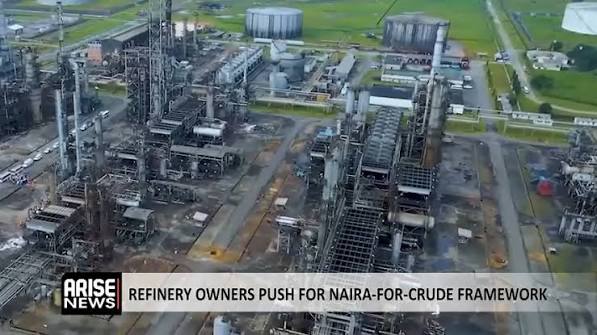
ABUJA, Nigeria — Nigeria’s refinery owners have called for urgent presidential intervention to establish a predictable naira-for-crude framework and commercially viable domestic crude pricing system, warning that continued structural constraints could undermine investment in local refining and keep the country exposed to imported petroleum products.
The Crude Oil Refinery Owners Association of Nigeria (CORAN), in a position paper released at the weekend, urged the Federal Government to convene a Presidential Refining Industry Roundtable involving refiners, crude producers, regulators, the Nigerian National Petroleum Company Limited (NNPC), financial institutions, infrastructure investors and relevant government ministries.
Discover more
Read Political News
Source Heavy Machinery
finance
The association said the roundtable should produce a clear and time-bound roadmap for resolving the financing, crude supply, pricing and infrastructure bottlenecks confronting Nigeria’s emerging refining industry.
At the centre of CORAN’s proposals is the full institutionalisation of the Naira-for-Crude initiative, which it described as essential to reducing the foreign-exchange risks faced by domestic refiners that predominantly sell petroleum products in naira.
“Naira-for-Crude should become an industrialisation policy rather than an episodic intervention,” the association said.
Refiners Seek Predictable Crude Pricing
CORAN said improved physical crude allocations to domestic refineries in the second quarter of 2026 were encouraging but insufficient to guarantee the long-term viability of the refining sector.
The association argued that the critical issue was not simply whether crude was allocated to local refineries, but whether it could be delivered under commercially sustainable terms.
It said domestic crude pricing should reflect factors including crude quality, delivery location, transportation and evacuation costs, avoided international freight and insurance expenses, financing requirements and reasonable commercial margins for producers.
The association noted that refiners frequently incur additional costs transporting crude by road, barge and pipeline, adding that such expenses must be incorporated into pricing arrangements if domestic refining is to remain competitive.
Discover more
Economic
Investments
Track Business News
CORAN therefore proposed a transparent domestic crude pricing mechanism that takes account of the economics of supplying Nigerian crude to local refineries rather than applying arrangements designed primarily around export markets.
Naira-for-Crude Seen as Investment Catalyst
The refinery owners argued that forcing domestic refiners to purchase crude in foreign currency while selling most refined products domestically in naira creates a currency mismatch that can increase operating risks and discourage investment.
They called for qualified domestic refineries—including modular and emerging operators—to be allowed to access Nigerian crude under a transparent framework and settle eligible transactions in naira.
For CORAN, such a system would go beyond short-term fuel-market intervention and become an industrial policy tool capable of supporting refinery investment, reducing foreign-exchange exposure and retaining more value within Niger

