



Olushola Bello
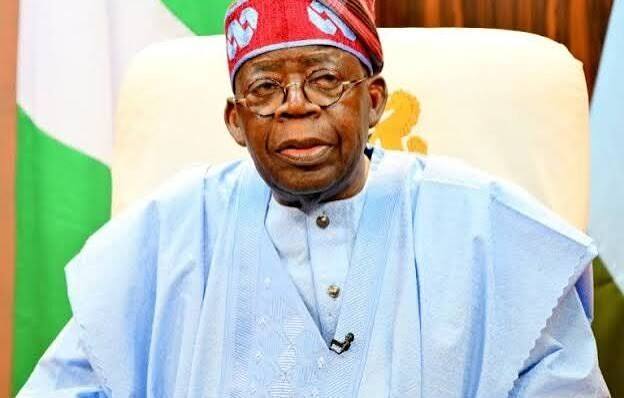
ABUJA — The Presidency has said President Bola Tinubu is “hale and hearty” and continuing to work from France, as opposition figures question his prolonged absence from Nigeria and seek clarification on the constitutional arrangements governing his duties.
Tinubu left Nigeria on August 30, 2026, for a three-week working vacation in Europe. The Presidency announced on September 21 that the President had extended the trip by a few days and would return to Nigeria at the weekend.
The President subsequently remained in Paris, where the State House said he continued to hold meetings connected with investment and economic development.
The prolonged stay has prompted questions from former Vice-President Atiku Abubakar, former Anambra State governor Peter Obi and the African Democratic Congress (ADC), particularly over the duration of the absence and the constitutional provisions governing presidential incapacity or temporary absence.
Presidency: Tinubu working from Paris
Presidential spokesperson Bayo Onanuga said the President was in good health and remained engaged in official business.
“Nigeria’s President is hale and hearty. He has been on a working vacation, which he is perfectly entitled to,” Onanuga said.
He argued that technological connectivity meant the President did not need to be physically present in Abuja to perform his executive responsibilities.
According to the presidential aide, Tinubu had continued to meet investors while in France, including discussions around major infrastructure projects.
The State House confirmed that Tinubu met French businessman Vincent Bolloré in Paris on September 18 to discuss investment in Nigeria’s creative, digital and fibre-optic sectors.
On September 24, the Presidency also said Tinubu witnessed the signing of memoranda of understanding involving the Ogun State Government and DP World concerning a proposed deep-sea port in Ogun Waterside.
The Presidency has also maintained that the President delegated Vice-President Kashim Shettima to represent him at the 81st United Nations General Assembly in New York.
Atiku raises constitutional questions
Atiku Abubakar questioned the extension of Tinubu’s stay abroad and asked the Presidency to clarify whether the constitutional requirements relating to presidential absence had been fulfilled.
Atiku cited Section 145 of the Nigerian Constitution, which provides for a written declaration by the President when he is proceeding on vacation or is otherwise unable to discharge the functions of his office.
Under Section 145(1), the declaration is transmitted to the President of the Senate and the Speaker of the House of Representatives, and the Vice-President performs the functions of President as Acting President until the President transmits a declaration to the contrary.
Section 145(2) provides that where the President fails to transmit the declaration within 21 days, the National Assembly may, by resolutions of both chambers, mandate the Vice-President to perform the functions of the office of President as Acting President.
Atiku therefore called for clarification on whether the relevant constitutional communication had been made.
His intervention also included questions about reports concerning the President’s health, but the Presidency has publicly stated that Tinubu is in good health.
Obi questions Tinubu’s UNGA absence
Peter Obi separately questioned Tinubu’s absence from the 81st UN General Assembly in New York.
Obi argued that Nigeria’s position as Africa’s most populous country made presidential participation in major international engagements significant.
Vice-President Shettima represented Nigeria at the UN General Assembly, in accordance with the Presidency’s earlier announcement that he would attend on Tinubu’s behalf.
Obi also criticised the practice of public officials travelling abroad for holidays or medical treatment and said that, if elected in 2027, he would not spend his presidential vacation outside Nigeria.
ADC demands clarification
The ADC Presidential Campaign Council also called on the Presidency to provide information on the President’s whereabouts, the reason for the prolonged stay abroad and the constitutional arrangements governing the administration during his absence.
The party said the extension had become a matter of public interest because the President’s originally announced three-week vacation had expired.
It also questioned the continued representation of the President at official engagements by Secretary to the Government of the Federation George Akume.
The ADC’s position is that the Presidency should clarify who is formally exercising presidential functions while Tinubu remains abroad.
What the Constitution says
The constitutional issue centres on Section 145, rather than on whether a president is physically required to remain in Abuja.
The Constitution specifically addresses situations in which the President is proceeding on vacation or is otherwise unable to discharge the functions of office. It establishes a mechanism involving a written declaration and, after 21 days without such a declaration, allows the National Assembly to mandate the Vice-President to act.
The available public statements from the Presidency establish that Tinubu left Nigeria for a working vacation, that the trip was subsequently extended and that Shettima was designated to represent him at the UN General Assembly.
Whether any additional constitutional procedure was required or invoked during the extended period depends on the formal communications made to the National Assembly and the precise legal status of the President’s absence.
Return expected during Independence anniversary
The Presidency has said Tinubu will return to Nigeria this week and participate in activities marking Nigeria’s 66th Independence Anniversary.
Onanuga also said the President would attend the Lagos premiere of a film commemorating the late democracy campaigner MKO Abiola.
The dispute over the President’s extended stay therefore combines three separate issues: the duration of his working vacation, his absence from the UN General Assembly and the constitutional procedure governing presidential absence.
The Presidency has maintained that Tinubu remains engaged in official duties from France, while opposition figures are seeking greater public clarification on the constitutional and administrative arrangements surrounding his absence
FG Commissions 581kWp Solar Mini-Grid to Power 13,000 Residents in Kwara
Olushola Bello
OKE-OYI, Kwara State — The Federal Government has commissioned a 581kWp interconnected solar mini-grid in Oke-Oyi, Ilorin East Local Government Area of Kwara State, expanding electricity access to an estimated 13,000 residents and supporting a growing cluster of small businesses.
The project, delivered by the Rural Electrification Agency (REA) under its Rural Electrification Fund–Interconnected Mini-Grid Acceleration Scheme (REF-IMAS), was developed by Nayo Tropical Technologies Limited with support from German Cooperation and the European Union through GIZ.
The installation comprises 1,336 solar panels and 84 batteries, supported by about 10 kilometres of distribution cables and transformers integrated into the local electricity distribution network.
The project is connected to the network of the Ibadan Electricity Distribution Company (IBEDC), providing electricity to residential customers as well as productive users.
Beyond expanding electricity access, the intervention is already changing the economic profile of Oke-Oyi, with new businesses emerging around the availability of more reliable power.
According to project information, the community now has 12 welding businesses, two pure-water companies, four grain mills, four aluminium-artisan businesses, an ice-block producer and a cold-room/ice-fish depot.
Three electricity vendors are also operating in the community, while three additional vendors, including a female entrepreneur, are expected to be registered.
The construction phase generated additional employment for local residents, including painters, welders, bricklayers, iron benders, tilers, plumbers, borehole diggers and excavation workers.
Representing the Kwara State Governor, Abdulrahman Abdulrazaq, at the commissioning, the state government described improved electricity access as an important enabler of enterprise, employment and community development.
The Minister of Power, Joseph Tegbe, said the project demonstrated that electrification should be measured by its economic and social impact rather than infrastructure delivery alone.
“The purpose of electrification is ultimately to improve lives and create opportunities,” Tegbe said.
He said the emergence and expansion of businesses such as welding workshops and grain mills demonstrated the direct link between electricity supply and local economic activity.
The minister also stressed the need to sustain completed electricity infrastructure so that the benefits of the investment could be maintained over the long term.
The Managing Director and Chief Executive Officer of REA, Abba Abubakar Aliyu, said the Oke-Oyi project reflected the agency’s focus on ensuring that electrification investments translate into measurable economic benefits.
“The real measure of an electrification project is not only the infrastructure we commission, but the opportunities that reliable electricity creates for the people who use it,” Aliyu said.
He noted that new businesses were already emerging in Oke-Oyi while productive activities were expanding, adding that sustainability would remain a key consideration beyond commissioning.
The Head of Development Cooperation at the German Embassy, Dr Karin Jansen, said the project demonstrated the potential of partnerships involving government, development agencies, utilities, private-sector developers and local communities.
She commended the Federal Ministry of Power, REA, Kwara State Government, IBEDC, Nayo Tropical Technologies, the European Union, GIZ and the Oke-Oyi community for their roles in delivering the project.
Jansen said the experience from Oke-Oyi could provide useful lessons for the development of future interconnected mini-grids and other distributed-energy solutions across Nigeria.
IBEDC’s Managing Director and Chief Executive Officer said the integration of the mini-grid into the distribution network demonstrated the value of collaboration between distribution companies, REA, private developers and development partners.
The company said it would continue working with REA and other stakeholders to ensure that the investment delivers sustained improvements in electricity services.
The Oke-Oyi community leadership also pledged to protect the infrastructure, describing reliable electricity as critical to improving livelihoods and expanding economic activity.
The project is part of the Federal Government’s broader rural electrification programme aimed at extending electricity to unserved and underserved communities, while deploying renewable-energy solutions to support economic and social development.
Improve accuracy for writing and career work

