



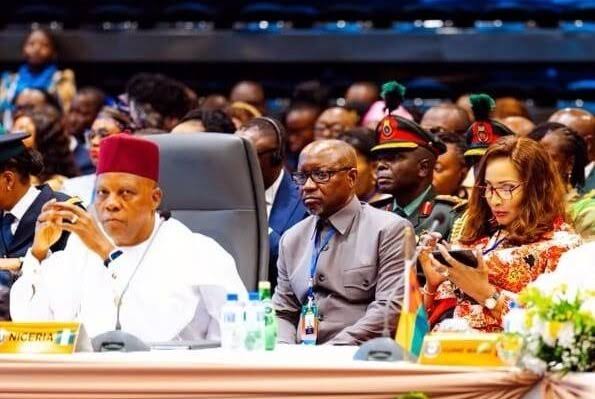
Nigeria’s Minister of State for Petroleum Resources (Gas), Rt. Hon. Ekperikpe Ekpo, has welcomed the unanimous endorsement of the African Atlantic Gas Pipeline Project by member states of the Economic Community of West African States (ECOWAS), describing the decision as a major milestone for regional energy security, economic integration and sustainable development.
Ekpo made the remarks on Sunday in Lungi, Sierra Leone, following the signing of the Inter-Governmental Agreement (IGA) for the project by ECOWAS Heads of State and Government during the 69th Ordinary Session of the ECOWAS Authority of Heads of State and Government.
The minister was part of Nigeria’s delegation led by Vice President Kashim Shettima, who represented President Bola Tinubu at the summit.
Nigeria-Morocco Gas Pipeline Moves into Implementation Phase
Ekpo said the signing of the agreement marks a decisive transition from planning to implementation for the project, also known as the Nigeria-Morocco Gas Pipeline, one of Africa’s most ambitious cross-border energy infrastructure initiatives.
According to him, the project demonstrates the collective commitment of West African leaders to strengthening regional cooperation while expanding access to reliable energy supplies.
“The agreement gives renewed momentum to a project that will unlock Nigeria’s abundant natural gas resources, reinforce regional energy security, expand export opportunities and accelerate industrial development across West Africa,” he said.
Nigeria Eyes Greater Value from Africa’s Largest Gas Reserves
Ekpo noted that Nigeria possesses approximately 215.19 trillion cubic feet of proven natural gas reserves, the largest on the African continent, positioning the country to play a leading role in regional and global gas markets.
He said the pipeline aligns with the Federal Government’s strategy of transforming Nigeria from a gas-rich nation into a gas-powered economy capable of supporting industrialisation, energy transition and long-term economic growth.
“This agreement strengthens our ambition to move from being merely a gas-rich country to becoming a gas-powered economy and a dependable regional and global energy partner,” the minister said.
He added that the project would support increased domestic gas utilisation while creating new export opportunities for Nigeria’s energy sector.
Beyond improving energy supply, Ekpo said the African Atlantic Gas Pipeline is expected to attract significant investment, generate employment and stimulate growth in key industries, including electricity generation, fertiliser production, petrochemicals, manufacturing and other gas-based sectors across participating countries.
He reaffirmed the commitment of President Tinubu’s administration to expanding gas production, developing critical energy infrastructure and maximising the economic value of Nigeria’s natural gas resources through both domestic consumption and strategic exports.
The minister also commended ECOWAS member states for unanimously backing the project, describing the decision as a strong demonstration of regional solidarity and a shared commitment to advancing Africa’s energy future.
The African Atlantic Gas Pipeline, widely known as the Nigeria-Morocco Gas Pipeline, is a proposed 6,900-kilometre offshore and onshore natural gas pipeline that will transport up to 30 billion cubic metres (bcm) of gas annually from Nigeria through 13 West African countries to Morocco, where it is expected to connect with European gas markets.
The multi-billion-dollar infrastructure project is designed to improve energy access, enhance regional energy security, support industrialisation, expand intra-African energy trade and stimulate economic growth across West Africa while strengthening the region’s integration into global energy markets
Tinubu Approves Expansion of Nigerian Army to 12 Divisions, Authorises Recruitment of 28,000 Personnel
President Bola Ahmed Tinubu has approved a major expansion of the Nigerian Army, increasing its operational structure from eight to 12 divisions and authorising the recruitment of 28,000 additional military personnel in what is being described as one of the most significant reforms of the country’s armed forces in recent years.
The decision, announced by the Presidency, is aimed at strengthening Nigeria’s security architecture, enhancing military readiness, improving operational effectiveness and enabling faster responses to evolving security threats across the country.
According to the Presidency, the expansion reflects President Tinubu’s commitment to building a modern, well-equipped and highly responsive military capable of tackling insurgency, banditry, terrorism, communal conflicts and other emerging security challenges.
The initiative also forms part of the administration’s broader investment in defence and national security, which includes the acquisition of critical military platforms and equipment, improvements in troop welfare, enhanced operational support and continued force modernisation.
Discover more
Oil
Newspapers
Geology
Under the approved restructuring, the Nigerian Army will operate 12 divisions strategically located across the country to improve command, coordination and operational efficiency.
The divisions and their areas of responsibility are:
- 1 Division Headquarters – Kaduna: Kaduna, Kano, Katsina and Jigawa States.
- 2 Division Headquarters – Ibadan: Oyo, Osun, Ekiti and Ondo States.
- 3 Division Headquarters – Jos: Plateau, Bauchi and Gombe States.
- 5 Division Headquarters – Makurdi: Benue, Nasarawa and Kogi States.
- 6 Division Headquarters – Port Harcourt: Rivers, Akwa Ibom and Cross River States.
- 7 Division Headquarters – Maiduguri: Borno and Yobe States.
- 8 Division Headquarters – Sokoto: Sokoto, Kebbi and Zamfara States.
- 9 Division Headquarters – Ilorin: Kwara and Niger States.
- 10 Division Headquarters – Jalingo: Taraba and Adamawa States.
- 81 Division Headquarters – Lagos: Lagos and Ogun States.
- 82 Division Headquarters – Enugu: Enugu, Anambra, Abia, Ebonyi and Imo States.
- 83 Division Headquarters – Benin City: Edo, Delta and Bayelsa States.
The establishment of new divisions in Makurdi, Ilorin, Jalingo and Benin City is expected to significantly enhance military command and control by decentralising operational decision-making and bringing troops closer to emerging security flashpoints.
The Presidency said the expansion will improve border security, strengthen the protection of critical national infrastructure, boost counter-insurgency and internal security operations, and enable quicker deployment of military assets during emergencies.
Discover more
economy
Geographic Reference
Stocks & Bonds
Security analysts have long argued that expanding the Army’s operational footprint is essential to addressing Nigeria’s diverse security threats, particularly in the North-East, North-West, North-Central and parts of the South-South.
The implementation of the new force structure will be carried out in two phases.
The first phase, which covers the establishment of the 5 Division (Makurdi), 9 Division (Ilorin), 10 Division (Jalingo) and the reorganisation of existing formations, is scheduled for completion by September 2026.
The second phase, involving the establishment of the 83 Division in Benin City and additional structural reorganisation, is expected to be completed by December 2026.
As part of the expansion programme, President Tinubu approved the recruitment of 28,000 additional personnel to strengthen the Army’s manpower and improve its capacity to conduct simultaneous operations across multiple theatres.
The recruitment is expected to reinforce ongoing military operations against insurgents, bandits and other criminal groups while supporting the Army’s growing operational responsibilities nationwide.
President Tinubu commended the Chief of Army Staff, Lieutenant General Waidi Ibrahim Shuaibu, as well as officers and soldiers of the Nigerian Army for their professionalism, dedication and unwavering commitment to protecting Nigeria’s sovereignty and territorial integrity.
He reaffirmed his administration’s commitment to sustained investment in the Armed Forces, stressing that a well-trained, adequately equipped and highly motivated military remains essential to safeguarding lives, securing the nation’s borders and creating a stable environment for economic growth and national development.
Discover more
Investing
Government
Stocks & Bonds
The latest expansion represents a significant milestone in the ongoing reform of Nigeria’s defence sector and underscores the Federal Government’s determination to enhance national security through increased military capacity, modernisation and strategic force deployment.

