



Twenty years of AGRA show that a farming revolution needs four things to happen together: good policies, capable institutions, working systems and execution. AGRA’s new Impact, Learning and Foresight Report shows where Africa has those, and where it does not yet.
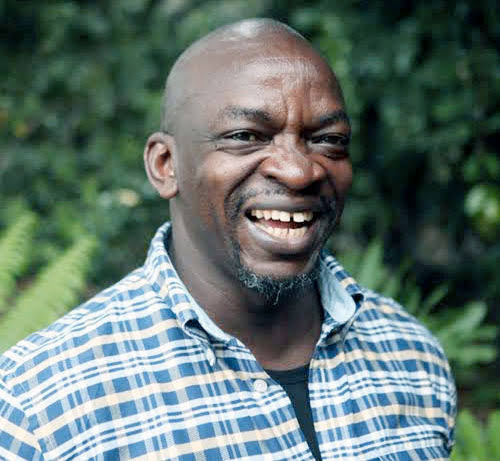
Boaz Blackie Keizire
In 2014, I was part of the team at the African Union Commission that drafted the Malabo CAADP Declaration, Africa’s promise to end hunger and halve poverty through agriculture. Then the scores came in. In the 2019 Biennial Review, the 11 countries where AGRA works most closely averaged 9.42 out of 10 for recommitting to the agenda. On hunger, they averaged 3.65; on poverty, 3.10. Every review since, up to the fifth and most recent, has shown the same pattern: high marks for commitments, coordination and reporting, low marks for hunger, poverty and investment. The countries had signed, coordinated and reported on time. We had measured whether governments carried out the tasks we listed, not whether they could deliver results. I helped build that system, so part of the blind spot is mine.
I joined AGRA in 2015 to work on that gap from the inside, alongside ministers, permanent secretaries and their technical teams. AGRA has now published its Impact, Learning and Foresight Report for its 20th anniversary. Prepared by AGRA and peer-reviewed, it is a learning report, not an independent evaluation. It deserves a wide readership beyond AGRA because it is candid about what worked and what did not, and about what comes next. Its central message matches what I have seen: Africa now largely knows what to do. Transformation depends on four things working together: sound policies, capable institutions, functioning systems and steady execution.
Three traps, one village
The report describes three traps that hold African farming back. In the productivity trap, maize yields average about 1.6 tonnes per hectare against a world average of 4. In the value trap, farmers grow more but cannot sell at a profit. In the capability trap, plans are written but not delivered. Only 4 of the 36 countries the report assesses have reached the stage where agrifood transformation drives economic growth.
I grew up in Kyeizooba, a farming village in Bushenyi, western Uganda. My parents grew mainly maize, beans and coffee. With no reliable market for maize and beans, the family struggled to move from growing food to eat to growing crops to sell. A single hailstorm or drought could push the whole family back into poverty in one season. I saw it first-hand. That village is my test for every number in the report. Did the change reach the farm gate, and did it raise incomes?
Building systems, not projects
Increasingly, the answer is yes, and the reason is that governments rebuilt the systems through which farmers, firms and the state operate. Seed is the clearest example. In Nigeria, Uganda, Tanzania, Malawi and Ethiopia, AGRA’s policy support helped governments move seed production and distribution from state agencies to private companies. That shortened the distance farmers travel to buy seed and fertiliser. In 2017, Tanzania allowed private firms to multiply publicly bred varieties. Thirty varieties reached the market, and annual improved-seed supply rose from under 20,000 tonnes to about 70,000. Nigeria created a dedicated seed regulator through its 2019 Seed Council Act. Malawi’s Seed Act brought in private seed inspectors and electronic checks against fake seed.
Markets are a system too. Tanzania’s fertiliser reform of 2017 cut testing from three years to one season and registration costs from $30,000 to $10,000, and abolished duplicate fees. The number of fertiliser businesses rose from about 450 to 2,500, farm-gate prices fell by 10-40%, and use rose from 302,000 to 435,000 tonnes. When Tanzania removed ad hoc export bans, bean exports grew by about $19m. Kenya passed a warehouse receipt law so that stored grain can serve as collateral.
Ethiopia’s mechanisation reform is the most complete example. Duties of 34-40% had made tractors unaffordable, and only about 9% of farmers used any machinery in 2015. AGRA and the Agricultural Transformation Agency gave the Ministry of Finance a cost-benefit analysis showing that the economic gain would exceed the tax revenue forgone. In 2019, the ministry exempted more than 90 items of mechanisation, irrigation and feed equipment from duty. Licensed equipment businesses rose by 43% within three months, and machinery imports by 33%. Government reports that mechanisation access has risen from under 5% to about 10% of farmers, and independent research finds clear wheat yield gains where machines are used. In 2026, the government extended the exemptions to more than 550 types of machinery. At AGRA’s recommendation, with the IFC, the National Bank of Ethiopia directed commercial banks to lend 5% of their portfolios to agriculture. Taken together, this made a policy into a working market.
Each of these reforms passed through ministries, cabinets, and parliaments. As the lead drafter of Uganda’s first National Fisheries Policy, I know how slow and political that process is. That is also why such laws last, and why I consider them among AGRA’s most underrated achievements. The credit belongs first to the governments that passed them.
Evidence that unlocks finance
The lesson that has shaped my work most came from my early career. As a young economist at Uganda’s Ministry of Agriculture, I defended the sector’s budget before the Ministry of Finance. I learned that finance ministries are not persuaded by requests for more money. They want evidence that a sector will grow the economy and create jobs, and without solid analysis, that case was hard to make. At the African Union, we supported countries in drafting costed national agriculture investment plans. Few attracted money from donors or finance ministries, because they lacked the business case a public investor needs.
At AGRA, we built that missing link. About $250,000 of design support for Burkina Faso’s rice flagship was followed by more than $600m from development partners, private investors and government. Tanzania’s Building a Better Tomorrow youth programme secured $129.7m from the African Development Bank and $110.4m from government. Ethiopia mobilised $94m for its wheat programme. Kenya ring-fenced $35m of its own budget for a national value-chain programme. Today, when we sit with finance ministries holding credible analysis, the conversation changes. This is how CAADP’s 10% budget pledge becomes a real line in a budget.
What we learned
The report also shows where results fell short, and we should take that seriously. In AGRA’s second phase, we tracked 72 policy reforms across 11 countries, work I led. Many were adopted. Most are still under implementation, because passing a law is the start of delivery, not the end. Some gains, such as structured output markets, did not outlast the funding behind them. A fund AGRA managed directly lost money. Too many small grants spread effort thin. Results for women and young people trail results on production: fewer than 8% of women in one flagship programme have obtained finance, and about 17% of youth employment outcomes were new jobs. Each of these lessons is now built into AGRA’s current strategy: fewer, larger country programmes, deeper work on implementation, and more attention to markets and finance. Critics who raise soil health, agroecology and farmers’ own seed systems are asking fair questions, and the answers should come from evidence.
A decade of delivery
The next decade raises the stakes. Africa’s population is heading towards 2.5 billion by 2050, and most Africans will live in cities by the mid-2030s. Urban demand and the African Continental Free Trade Area offer a large market, and the Kampala CAADP Declaration sets targets for 2026-2035. Yet on current trends, food imports could reach about $130bn by 2035, and climate shocks, distant wars and heavy debt can raise the cost of food and fertiliser overnight.
Climate is the next system to build. Ethiopia’s shift from diesel to solar irrigation pumps shows both the opportunity and the gaps in quality standards, spare parts and finance. Extension services, input markets, trade rules and climate finance must work as one system that serves farmers, lets businesses operate profitably and allows governments to lead.
That is why AGRA is supporting the African Union and AUDA-NEPAD in developing a stronger CAADP and Food Systems Governance score. It tests whether governments can turn plans into jobs and incomes, not just whether they have made commitments. Once adopted, it could change the game. Some countries will find it uncomfortable because it will expose weaknesses in governance. That discomfort is useful.
An anniversary report can be a trophy or a mirror. This one is a mirror worth reading. Africa has written the rules. The next ten years must build the state that delivers them, until a family in a village like Kyeizooba can not only grow more, but sell it at a profit.
Boaz Blackie Keizire is Director of Policy and State Capability at AGRA, which he joined in 2015. He was previously Principal Economist and CAADP focal point at Uganda’s Ministry of Agriculture, Head of Agriculture and Natural Resources at Uganda’s National Planning Authority, and Head of the Division of Agriculture and Food Security at the African Union Commission.

