



Siaka MOMOH
If you think it is a Nigerian problem, you must be kidding. Just like most Nigerians think the trending high cost of products is Nigerian ‘wahala’. Selected cases by checkkitapp.com in Nigeria give us a picture of the menace of fake goods in Nigeria. If you go home with this, you will condemn Nigeria in totality for this crime. But when you read the account of alpvision.com, you will have a true outlook of the issue in your hands ,so to say. We bring you both on our pages today.
checkkitapp.com:
Packaged Foods
Fake food is simply known as food fraud. It kills. It might seem strange but there is a lot of fake rice in Nigeria and over 100 bags of plastic rice were seized in 2016. Fake food generally is so much that it has been taking Nigerian lives and one painfully unforgettable instance came up in 2018 when two students of a school in Abuja died after eating counterfeit biscuits at a classmate’s birthday party.
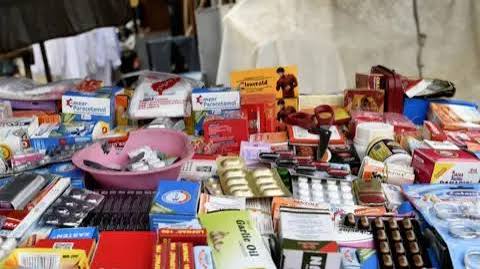
Pharmaceuticals
Eric Arubayi was a growing sensation in the Nigerian music industry. Unfortunately, his promising future was cut short when he died after taking counterfeit malaria pills
3. Footwear
These days, it seems everyone has on a Nike or Adidas sneaker on. Let’s not forget all the Gucci, Christian Louboutin, Louis Vuitton, and Versace footwears you also find on the foot of many and those being sold by several online and offline outlets.
4. Clothing
In 2018, so many fake Nigerian World Cup jerseys dominated the market. It was so bad then that some people were selling the $85 jersey for as low as N2,500. Now, it was incredibly easy to spot the fakes but, somehow, people just didn’t care. This kind of counterfeiting affects local brands too. Today, it’s safe to say that for almost every producer selling high-quality local fabrics, there’s another that just wants to make quick cash with fakes.
We also have a litany of leather goods, automotive parts,
optical media (CDs & DVDs cosmetics, alcohol and jewelry all over Nigerian market space.
War Against Counterfeit Medicine
We must not forget Dora Akunyili’s The War Against Counterfeit Medicine: My Story, a unique study of a global phenomenon – in which law breaking and profiteering prevail at the cost of human health and life – and of the ways in which this can be fought by appropriate legislation, regulation and enforcement. The challenges in countering are enormous, not least since such illicit production of food and drugs is an immensely lucrative business. Prof.Akunyili cites statistics from the World Health Organization, noting that in 2003, the worldwide sale of counterfeit drugs accounted for US$32 billion, or 10 per cent of all drug sales. Late Dora Akunyili’s achievements as Director General of NAFDAC are an inspiration to everyone, in every country, who is involved in countering the proliferation of fake food and drugs. Her experiences are a message of hope. They are testimony to the commitment and courage of individuals who serve the institutions, which work to ensure that commercial profitability goes hand in hand with the safety and wellbeing of consumers.
alpvision.com:
Counterfeit goods from china: What you need to know
According to a 2025 World Trademark Review report, over 80% of counterfeit goods worldwide are made in China. The country’s vast manufacturing capacity and fast-moving export channels make it the center of the global counterfeit trade. Learn what’s happening and how you can protect your brand.
Chinese factories are the hub of global counterfeits, producing fake versions of legitimate products using the same molds and packaging, sometimes made on the same lines after hours. The counterfeits are then sold on major e-commerce platforms and shipped worldwide in small parcels that slip past customs.
You’ve seen what Chinese counterfeits look like on the ground: perfect replicas, convincing packaging, and unauthorized production runs that quietly fuel a global crime ecosystem.
If you’re not actively protecting your brand, you risk reputation damage, revenue loss, and customer trust. And the longer you wait, the harder it gets: Chinese counterfeit networks are fast, global, and increasingly sophisticated.
The Size and Scale: Landscape of Counterfeiting in China
China is the dominant source of counterfeit goods worldwide. The U.S. Trade Representative’s 2023 report states that 84% of the total value and 90% of the total volume of counterfeit goods seized by the United States Customs in 2023 originated from China and Hong Kong.
The number isn’t limited to the United States market. China and Hong Kong combined account for over 85% of the world’s seized counterfeit and pirated goods, according to the same report.
And that’s just what was caught. The scale is systemic. A 2020 analysis by IP consultancy Rouse estimated that counterfeit goods made up 12.5% of China’s total exports, equivalent to around 1.5% of its GDP. This size shows a widespread industrial participation, not isolated bad actors.
Why is China the hub of counterfeits?
China leads in counterfeiting for the same reasons as its position as the world’s factory. The same system that powers its manufacturing exports also makes it easy to produce and ship counterfeit goods:
- World-class domestic production infrastructure: Counterfeiters use the same factories, labor, and packaging suppliers as legitimate manufacturers.
- After-hours or off-the-books production: Some fakes are made using the same machines and molds used for official goods, outside your domestic control.
- Massive supplier and logistics networks: Fakes are shipped globally through high-volume, low-value parcels, via major ports like Shanghai.
- E-commerce platforms make it easy: Sellers reach global buyers instantly through Temu, AliExpress, and third-party marketplace listings.
- Enforcement gaps inside China: China’s intellectual property and copyright law allows companies to pursue legal action, but enforcement is often slow, local, and uneven, especially if IP rights aren’t already registered.
Challenges in most cases also come from the fact that the system often operates across borders that lack a unified international trade agreement, making coordinated action difficult.
Channels and Sectors at Risk of Chinese Counterfeiting
Counterfeit goods from China hit industry sectors with high margins, strong brand value, or trusted reputations. If your products are easy to copy and expensive to replace, you’re a prime target.
High-Risk Sectors
Here are the high-risk industry sectors:
- Luxury fashion and accessories: Handbags, shoes, watches, including iconic brands like Louis Vuitton, are all widely counterfeited and sold as “superfakes.”
- Electronics: Smartphones, chargers, headphones, networking gear, often poorly made, sometimes dangerous.
- Pharmaceuticals and cosmetics: Fake medications, skincare, and makeup with untested or harmful ingredients.
- Alcohol, wine, and spirits: Especially high-end luxury brands like Bordeaux wines, often repackaged or entirely faked.
- Toys and baby products: Knock-offs may contain banned or toxic materials, creating direct safety risk cases.
Channels Used to Sell Counterfeits
The following are the channels that counterfeiters use to sell and ship the products:
- E-commerce platforms: AliExpress, Temu, DHgate, Taobao, and even global sites like Amazon or eBay.
- Social media and livestream sales: Counterfeiters sell direct to people via TikTok, Instagram, WeChat, or Douyin.
- Small parcel shipping: Goods move in bulk via air or sea through international logistics channels, then get split into thousands of low-declaration domestic packages to avoid detection.
Counterfeiting Case Study: Bordeaux Wine in China
In 2010, Bordeaux became China’s top wine import and a counterfeit hotspot.
- At its peak in 2021, China accounted for 23% of Bordeaux’s export volume and 27% of value.
- Reports surfaced of more 1982 Château Laffite bottles in China than were ever produced in that particular year.
- Fake labels, resealed bottles, and unauthorized stock flooded retail and e-commerce.
- The counterfeit wave eroded trust, slowed sales, and hurt Bordeaux’s reputation.
The situation shows how relying solely on international IP and copyright law offers limited protection if the enforcement system in China isn’t activated early. Bottom line: If Bordeaux can be counterfeited, so can your brand.
Key Challenges in China for Brand Protection from Chinese fakes
Brand protection in China comes with unique industry, operational, and legal hurdles. Even well-resourced companies face legal, copyright, digital, and cultural barriers, such as:
- Legal and enforcement complexity: While China has an intellectual property (IP) and copyright law, the domestic enforcement system is often slow, fragmented, or inconsistently applied at the local level. Results vary region to region.
- E-commerce and livestream loopholes: Online platforms, including live-streaming apps and cross-border sellers, make it easy for counterfeiters to reach people quickly and at scale.
- Difficult monitoring and detection: Many Chinese counterfeits are “superfakes” and visually indistinguishable from genuine goods. Standard checks often fail.
- Legal gaps and infringement risks: Intellectual property and copyright rights in Europe or the United States don’t automatically apply in China, if you’re not registered in the country (in both Latin and Chinese scripts.
- Local dynamics: Prestige-driven buying behavior and a fast-moving market make luxury brands especially attractive targets for counterfeiters.
Practical Steps for Brand Owners to Protect Their Brand in/From China
The scale and speed of counterfeiting linked to China demand more than reactive measures. Brand protection services aren’t enough here. You need to be proactive, structured, and China-specific. Here’s a five-part framework to build your brand defense.
Step 1: Pre-Market Intellectual Property (IP) Planning
Start before you sell. If you wait until counterfeits appear, it’s often too late to claim ownership or block misuse. Begin by mapping out how your industry typically distributes or manufactures in the country, since each sector faces different threats.
- Register your trademarks early in China, both in Latin script and Chinese characters.
- Apply for Geographical Indication (GI) protection if your product qualifies (as Bordeaux wine).
- Map out your sales and distribution channels to identify weak links or grey-market diversion.
Step 2: Supply-Chain Transparency and Product Authentication
Brands working with Chinese manufacturers often rely on contractual agreement clauses to limit unauthorized production. To overcome the on-ground oversight and the sophistication of counterfeits, you need to make it difficult and costly for counterfeiters to replicate your product. Here’s how to do it:
- Use anti-counterfeit technologies that are resistant to duplication. AlpVision’s Cryptoglyph is a great example as it’s almost impossible to replicate the technology.
- Audit Chinese manufacturing relationships for intellectual property exposure. Track supply chain risk points, including contract manufacturers, packaging suppliers, and exporters.
- Train your team, partners, and customers to identify genuine products and flag suspicious ones. AlpVision makes it extremely easy by offering mobile authentication.
Step 3: Monitoring, Surveillance and Enforcement
Counterfeits move fast, so your detection and response need to be faster and consistent.
- Scan Chinese and global e-commerce platforms, like Taobao, JD.com, AliExpress, for unauthorized listings, paying closer attention to major hotspots like Shanghai, Shenzhen, and Guangzhou.
- Engage local intellectual property lawyers or enforcement partners in China to conduct takedowns, gather evidence, and pursue legal action.
- Use all legal options available: civil suits, infringement and administrative actions, and criminal enforcement in cases where evidence supports escalation.
Step 4: Consumer Communication and Education
The more educated your customers are, the harder it is to sell them counterfeits, anywhere in the world.
- Give clear public guidance on where and how to buy authentic goods.
- Build trust with storytelling in China. Highlight authenticity, heritage, and product integrity in your brand messaging.
Step 5: Global Coordination & Ongoing Review
Tackling counterfeits from China is not a one-time fix. Your strategy should include constant review and adaptation as you scale.
- Align brand protection across domestic and international markets, from China to export destinations.
- Regularly reassess your exposure as you expand sourcing, manufacturing, or market presence in China.
Act Against Chinese Counterfeits with AlpVision
China is both an opportunity and a risk for brands. It remains a major growth market, but also the largest source of global counterfeits. If your company has any exposure there, your protection can’t wait.
What happens if you don’t act?
Take a luxury brand, for example, that delays trademark registration in China. Within months, counterfeit versions will dominate international marketplaces. Consumers won’t be able to trust the brand, and consequently, sales will collapse. The brand can launch a legal action. But by then, the damage is already done, taking a hit on reputation, revenue, and market share. Bordeaux avoided this outcome by securing a Geographical Indication (GI) protection agreement in China early. Without it, fake Bordeaux could have overwhelmed the market and destroyed decades of brand value. This makes proactive intellectual property protection much cheaper than trying to recover from counterfeit damage

