



Recognizing the power of business to shape the world through environmental, social and governance policies, CIB was a founding signatory of the UN’s 2019 Principles for Responsible Banking (PRB). It has integrated the six principles into its business operations by aligning its core strategy, decision-making, lending and investment with ethics, transparency, accountability and fairness.
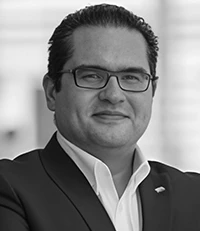
Mr. Islam Zekry, Group Chief Finance & Operation Officer & Executive Board Member, tells us more about the Bank’s PRB journey.
As founding signatories of UNEP FI and the Net-Zero Banking Alliance, CIB has long been seen as a leader in financial innovation in Egypt. How does the Bank define sustainability within its broader growth strategy and embed it into its core banking strategy?
In fact, CIB began building internal capacity as early as 2013, establishing a dedicated Sustainable Finance Strategy aligned with its five-year corporate plan anchored in two goals: leading Egypt’s sustainability transition and becoming a regional sustainable finance leader.
Guided by ESG principles, CIB established and implemented a robust Sustainability Strategy, focusing on four strategic priorities: Risk Management, Revenue Generation, Reputation (Advocacy), and Ecological Footprint. Leveraging its institutional strengths and human capital, the Bank integrates sustainability across all business lines – managing environmental, social, and climate risks; expanding green financing; innovating sustainable products; securing sustainable capital; and minimizing its operational footprint.
From 2021 to 2023, the Bank represented Africa in the Net Zero Banking Alliance (NZBA) inaugural Steering Committee and the MENA region on the banking advisory board of the Principles of Responsible Banking. In keeping with these commitments, CIB has developed robust Sustainable Finance Institutional Pillars – an agile and comprehensive framework that encompasses sustainability governance, policy, frameworks, systems and strategy, education, and innovation.
By fostering innovation and building capacity, the strategy reflects CIB’s deep commitment to embedding sustainability principles throughout operations, integrating ESG into decision-making, and positioning sustainable finance as a catalyst for transformative, long-term impact. We use a rigorous SF framework to assess and manage the environmental and social impact of our financed projects according to international standards like ICMA, DFIs Common Principles, and EU taxonomy, with a growing green finance portfolio that includes energy efficiency, water treatment, and renewable energy.
Internally, CIB voluntarily reports ecological footprint data – including land and water use – alongside carbon emissions (Scopes 1, 2, and 3) and has led carbon assessments across seven carbon-intensive sectors, using this data to inform transition planning. We’ve also taken steps to reduce our own carbon footprint, including implementing energy-efficient branches and promoting paperless banking.
What green finance products and instruments has CIB launched, and how are they tailored to the Egyptian or African market? What are the main barriers to scaling green finance?
CIB has emerged as a trailblazer in sustainable finance in Egypt and Africa. We’ve evolved from just offering individual green products to creating comprehensive transition finance programs. We’ve hit some major ESG milestones along the way, innovating sustainable finance products and instruments like Egypt’s first Corporate Green Bond – a revolving US$100 million program we launched back in 2021 with the IFC. It’s been fully utilized in high-impact projects and has really become a model for how to build environmental and social risk management systems in our region. We also secured a substantial 7-year US$100 million transition finance loan with the IFC, which is helping us spearhead sectoral decarbonization efforts.
Another breakthrough was our launch of Africa’s first and largest non-sovereign securitization social bond – worth 3.8 billion Egyptian pounds – in partnership with Tasheel Finance Company. This directly supports MSME loans, creating real social impact on the ground. We’re also involved in environmental projects like the Egyptian Pollution Abatement program (EPAP), funding wastewater treatment and air pollution control. And, in partnership with the Ministry of Agriculture, we launched a 1 billion EGP green financing initiative that’s fully utilized, supporting agricultural projects in rural communities. Through our Agricultural Development Program (ADP), we’ve approved around 1 billion Egyptian pounds for projects focusing on medicinal plants, horticulture, and irrigation.
Despite growing momentum, there are definitely some significant barriers to scaling green finance, especially in emerging markets. Cultural resistance is still a real hurdle along with the complexity of transition risks, which makes long-term planning tricky, particularly for carbon-intensive sectors. Also hampering progress are a lack of tailored green financial products that really fit the unique needs of different industries and underdeveloped enforcement tools.
These issues call for systemic policy reform, targeted capacity-building, and stronger collaboration across our entire financial ecosystem to drive truly scalable green finance solutions.
How does CIB contribute to development finance and collaborate with multilateral institutions for sustainable development, including cross-border initiatives?
CIB has pushed the envelope in terms of sustainability and ESG integration, combining innovation with smart policy alignment and strategic partnerships. We were the first bank in Egypt to issue a green bond and have mobilized over US$333 million in blended finance, plus US$9.12 million in grants from IFC, EBRD, and PROPARCO for climate projects. Our Green Bond Program achieved 3x coverage, proving there’s genuine appetite for these solutions in our market and real impact on the ground. Our green bond taskforce, working alongside the IFC, has approved twenty-two sub-projects so far (including CIB’s new headquarters as a green building), encompassing energy efficiency, green building certification, water management and energy management systems (ISO 50001). This program includes the previously mentioned US$100 million 7-year transition finance loan and Africa’s first and largest non-sovereign securitization social bond worth EGP 3.8 billion.
In December 2024, we concluded a three-year agreement with the IFC to help our clients in carbon-intensive sectors – Oil & Gas, Power, Real Estate, Steel, Aluminium, and Cement – navigate their transition. It’s designed to develop sector-specific decarbonization pathways, create tailored transition plans, and help reduce emissions while staying competitive amid tightening climate regulations. It’s exactly the kind of practical support these industries need.
Last but not least, there are the agricultural initiatives I spoke about earlier – the EGP 1 billion green financing program with the Ministry of Agriculture, and the EGP 1 billion in loans through our Agricultural Development Program. It’s inspiring to see the impact on the ground

