



Commentary Industry Insight from Ethical Corporation Magazine, a part of Thomson Reuters.
January 27 – The musicians were present, the instruments polished, the composition familiar. But no one was playing from the same score.
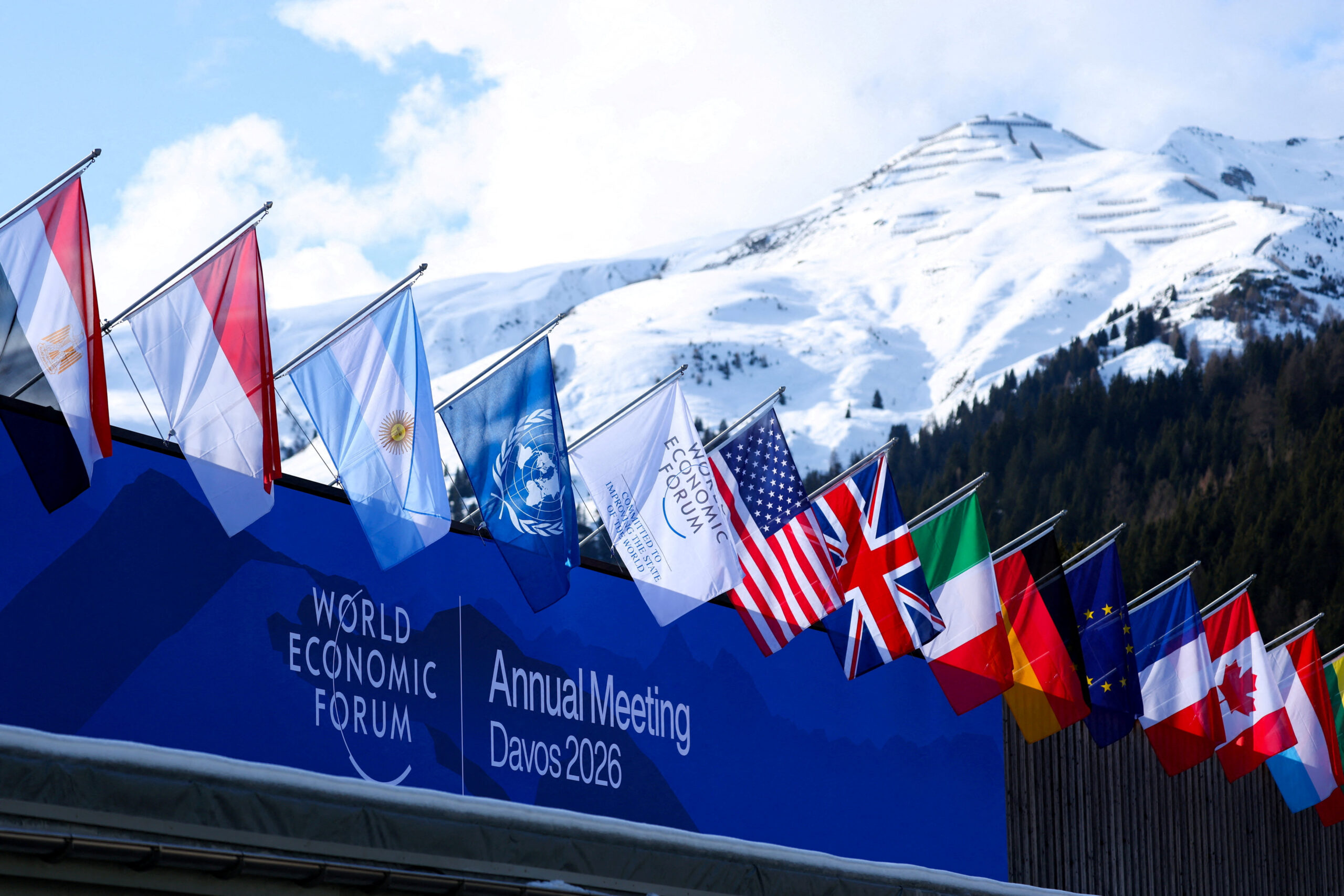
The first World Economic Forum without Klaus Schwab at the helm did not merely lack its conductor. It revealed an orchestra that has forgotten why it ever assembled in the first place.
A forum built for dialogue has drifted into a staging ground for dominance. This year in Davos felt less like a meeting and more like a mirror, reflecting the very dysfunction it was created to repair.
The WEF is easy to mock: the queues of black limos, the status-coded badges, the sense of a rarefied elite debating the state of the world from a mountain resort. Yet for half a century it has served a more practical role: as a stress-test for coordination among the political and economic elites who shape global markets, institutions and rules of the game.
When alignment among governments, major corporations and financial power centres is strong, it tends to surface here. When it weakens, Davos becomes one of the first places where the breakdown is visible.
This year, the fractures were so pervasive that Davos felt like a hall of broken glass, each shard reflecting a different power, priority and reality.
The significance lay not in any single speech or walkout, but in what the splintering itself exposed lying beneath the surface drama.
Canada’s Prime Minister Mark Carney speaks during the 56th annual World Economic Forum (WEF) meeting in Davos, Switzerland, January 20, 2026. REUTERS/Denis Balibouse Purchase Licensing Rights, opens new tab
The pattern playing out in Davos is the same pattern stalling climate action, hollowing out multilateral agreements and leaving the Sustainable Development Goals dangerously adrift.
It is not a failure of knowledge. We know what needs to be done. It is not a failure of resources. Global capital has never been more abundant.
It is a failure of collaboration and collective action. A failure of governments to align around shared interests rather than narrow advantage; of businesses to act as system-shapers rather than short-term competitors; and of leaders across sectors to share risk, and act in service of a common good.
In his much-praised speech, Canadian Prime Minister Mark Carney named it directly: the rules-based international order has ruptured. Middle powers can no longer rely on the protection of stable institutions. His conclusion was not resignation but redirection. If the old architecture cannot hold, those outside its centre must build new coalitions capable of acting without permission from above. This is more than geopolitics. It is the logic of every major transition in history.
Global inflows to ESG funds peaked in 2021 at $645 billion. But that was back when the Biden administration was encouraging investors to put
We carry a comforting myth that there are people in charge who know what they are doing, who understand the system and who hold the power to fix it.
It’s a story we learn early in childhood: when problems become overwhelming, someone in authority will step in and solve them.
But we are not children. And watching leaders at Davos only reinforces what we learn when we become parents ourselves: those in charge are often far less in control than they may appear. The better lesson lies not in childhood instinct, but in history.
The abolition of slavery did not begin with empires. Universal suffrage did not originate with kings. Civil rights did not start in palaces. Systemic change happens when coalitions form in the middle and make the old order economically, socially and politically untenable.
Workers from Brazilian reforestation startup Mombak prepare to plant native species to restore degraded pastureland to rainforest at Turmalina Farm in Mae do Rio, Para, Brazil. Nature restoration was one of the subjects that galvanised coalitions forming at the fringes of Davos 2026. REUTERS/Wagner Santana Purchase Licensing Rights, opens new tab
Those in middle positions, whether nations, businesses or citizens, consistently underestimate their collective power. Alone, each feels constrained. Together, they constitute a force no single actor can match. This is the multiplier effect of collaboration, the only lever capable of moving systems when concentrated power has stalled.
Progress comes not from pleading with the powerful, but from making new coalitions so effective that resistance becomes irrelevant.
And this is why the most important story of Davos 2026 was not in the Congress Centre, but on the margins – in side rooms, informal gatherings and unlikely partnerships.
That’s where we saw coalitions forming around regenerative agriculture and nature restoration; serious conversations about redirecting the $2.6 trillion in subsidies that destroy ecosystems; investors working with policymakers to bring nature onto balance sheets; countries and companies aligning on clean infrastructure, food system reform and long-term resilience.
Davos has not lost its relevance. Bringing the world’s political and economic leaders together still matters. But credibility is no longer built by a small group at the top.
So, the question facing the World Economic Forum is simple: can it reclaim the cooperation that has migrated to its periphery and bring it back to the centre where it belongs?
Opinions expressed are those of the author. They do not reflect the views of Reuters News, which, under the Trust Principles, is committed to integrity, independence, and freedom from bias. Ethical Corporation Magazine, a part of Reuters Professional, is owned by Thomson Reuters and operates independently of Reuters News.
Paul Polman is the former chief executive officer of Unilever and co-author of the bestselling book “Net Positive: How Courageous Companies Thrive by Giving More Than They Take”.

